
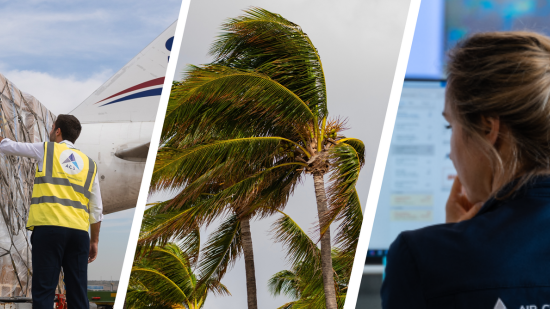
 When hurricanes strike, time is limited – learn how ACS and charter aviation supports rapid disaster response.


Supporting disaster response in hurricane season: the role of charter aviation
Every year between June 1 and November 30, the Atlantic basin produces an average of 14 named storms. Around half of those reach hurricane strength. For the communities in their path – across the Caribbean, the Gulf, the southeastern United States, and as far north as Canada – the forecast cone on a weather map is the start of a countdown. That window is where charter aviation earns its place in the humanitarian response toolkit.
A regional problem, not a Caribbean one
It’s tempting to picture hurricane season as a Caribbean issue, but the reach is continental. Hurricane Sandy made landfall in the Northeast in 2012 and pushed storm surge into Lower Manhattan, the Jersey Shore, and coastal Connecticut – parts of that coastline are still rebuilding. Nantucket, Cape Cod, and Long Island all sit within the realistic strike zone for a late-season system tracking up the eastern seaboard. And the reach extends beyond the US entirely: in 2022, Hurricane Fiona swept into Nova Scotia as the costliest extreme weather event ever recorded in Atlantic Canada, knocking out power to more than 500,000 households across the Maritimes and moving some homes clean off their foundations.
This is the operational reality our clients plan around: a hurricane that forms off the coast of Africa can, within two weeks, be threatening infrastructure from Kingston to Halifax.
The window is narrower than it looks
Hurricanes intensify quickly. A tropical depression on Monday can be a Category 4 by Thursday, and rapid intensification – a wind speed increase of 35 mph in 24 hours – has become a more frequent feature of recent seasons. Forecasters do excellent work, but the operational truth is that the usable window for moving people and supplies is short, and it shrinks by the hour.
Airports close, runways flood, fuel supply chains break, ground crews evacuate, and air traffic control coverage thins. The same infrastructure aid organizations rely on to deliver a response is often the first thing the storm takes offline. Coordinating a charter into this environment means resolving permits, slots, aircraft positioning, crew duty hours, and ground handling against a clock that doesn’t pause. Commercial schedules aren’t built for this – charter is.
There’s a pattern we see play out almost every season. A storm is announced, and we lay out charter options early. Understandably, organizations often hold off – watching the forecast, waiting to see whether the track shifts or the system weakens before committing. Then the hurricane intensifies on short notice, or changes course, and the same organizations come back wanting to move people out. By that point the window has frequently closed: airports are shutting, slots have gone, and the aircraft that was available 48 hours earlier is now committed elsewhere. Holding a plan in reserve costs little; building one from scratch as the storm makes landfall is often impossible.
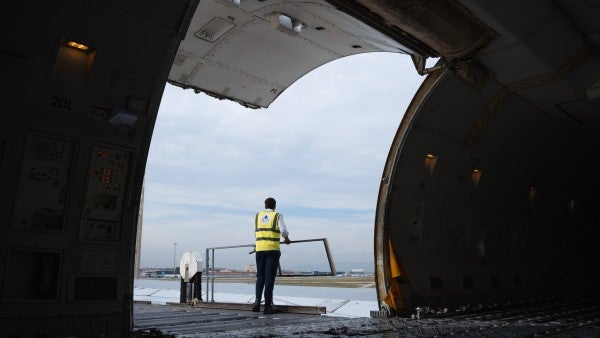
What ACS brings to a hurricane response
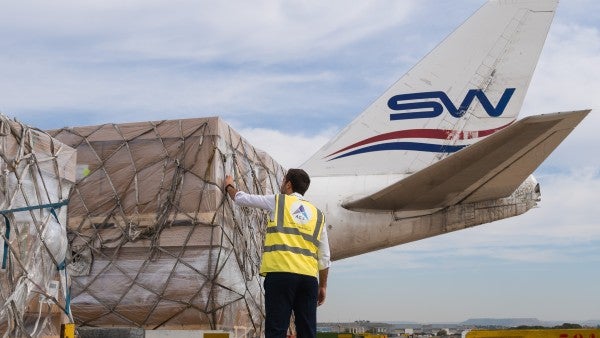
Our cargo and group travel divisions have been supporting humanitarian missions for decades. The pattern is familiar – a government department, NGO, or relief agency calls us at 2 a.m. with a manifest and a destination, and we work to mobilize aircraft as fast as conditions allow, often before sunrise.
A few things make that possible:
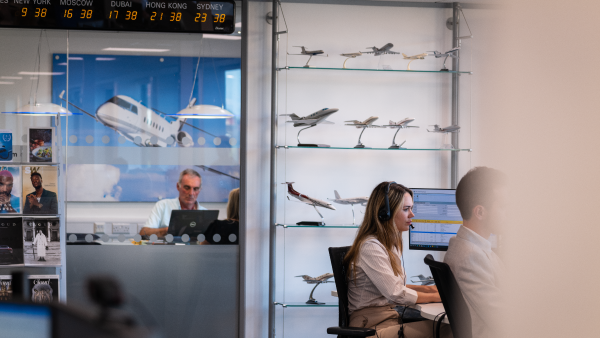
- We operate 24/7. Teams across our global office network hand off live missions across time zones, so no request loses momentum overnight.
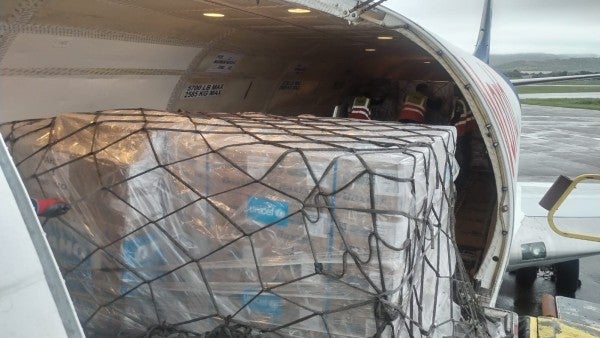
- We’re not tied to a single fleet. That means we match the right aircraft to the mission – a 737 freighter for palletized relief goods, a turboprop for a damaged runway, an evacuation jet for medical priority cases.
- We can fly into airfields commercial carriers often won’t. Smaller and private fields matter enormously when the main international airport is closed and the alternate is a 4,000-foot strip on the other side of the island.
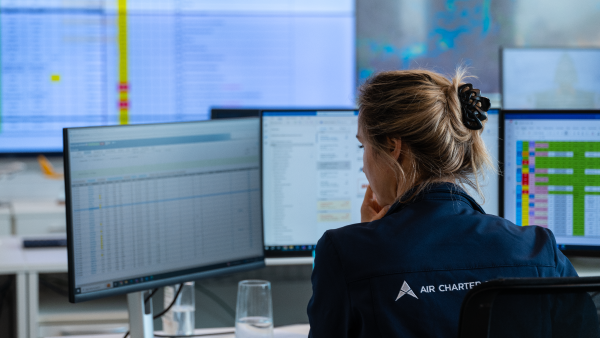
- We know the region. Our operations team tracks airport status across the Caribbean and the eastern U.S. seaboard in real time during an active storm – which fields are open, which have fuel, which can handle a widebody, and which have functioning ground equipment. That local knowledge is the difference between an aircraft landing with relief cargo on day one and an aircraft circling a closed airfield.
“From Hurricane Irma, Hurricane Maria, and Hurricane Katrina, we’ve seen them all and supported every response effort throughout. Whether it be first responders, shelters, and sanitation kits, or critical ground support equipment, we have quite literally moved and seen it all.” – Alfie Arrowsmith, Vice President of Cargo, North America
Hurricane Melissa: a recent example
When Melissa struck Jamaica on October 28, 2025, it was the strongest hurricane to hit the island since records began in 1851, with sustained winds of 190 mph. Our Government and Humanitarian Services team had been in contact with NGOs and government partners in the days before landfall, lining up potential relief flights against the forecast track.
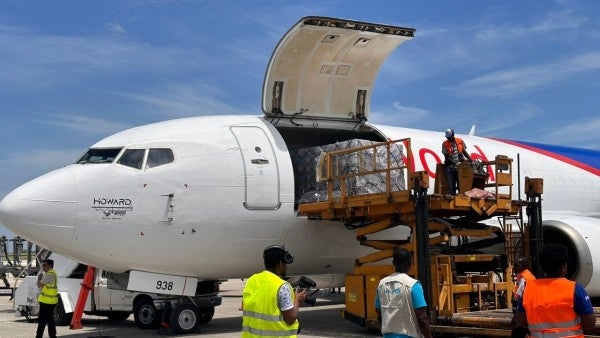
The first non-military aid flight was an ACS charter: a Boeing 737-400F out of Antigua into Montego Bay, with 16 tons of shelter kits and blankets. From there, brokers across our London, Florida, California, and Spain offices coordinated follow-on charters around the clock – more than 150 tons of aid into the country in the first week, alongside passenger evacuations off the island.
Read the full account on the ACS news page.
Time-critical, by definition
Disaster response is one of the most inherently time-critical operations there is. ACS Time Critical runs on that principle year-round, operating to deadlines measured in hours rather than days – and integrating road solutions where they’re the faster, smarter answer. When an airport is closed but a port two hours away is open, dedicated trucking gets the cargo the rest of the way. When a runway can take a freighter but not a widebody, road transfer handles the final leg. Door-to-door, air and ground working as one operation.
Hurricane season is when all of that matters most.
If your organization is preparing for the 2026 season, or you need to move people or cargo in or out of an affected region today, our teams are available around the clock.